Great Barrier Reef: Complete Guide to Exploring the World's Largest Reef
Complete guide to visiting Australia's Great Barrier Reef: diving, snorkeling, tours from Cairns, best season, conservation efforts and practical tips.
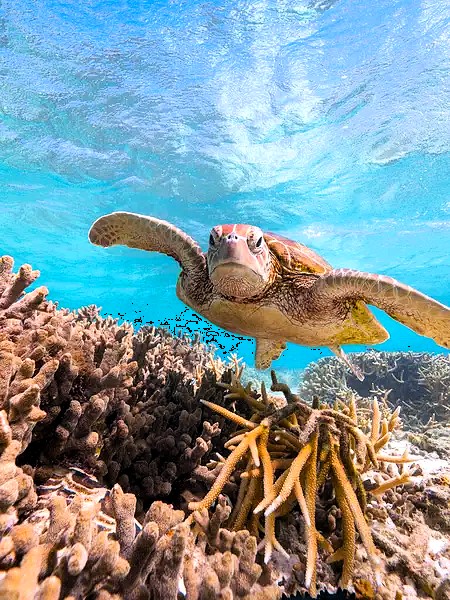
Few experiences in the world compare to floating above the turquoise waters of the Great Barrier Reef and gazing down at an underwater universe of impossible colors just a few meters below. This coral reef system, the largest on the planet, stretches 2,300 kilometers along Australia's northeastern coast, covering approximately 344,400 square kilometers, an area comparable in size to Italy or Japan. Declared a UNESCO World Heritage Site in 1981, it was the first coral reef ecosystem to receive this designation, and it remains one of the most extraordinary living structures on Earth.
The Great Barrier is not a single reef but a mosaic composed of more than 2,900 individual reefs, 900 islands, and hundreds of sand and coral cays scattered along the Queensland continental shelf. Its waters are home to over 1,625 species of fish, 400 types of coral, 4,000 varieties of mollusks, 240 bird species, 133 species of sharks and rays, and six of the world's seven marine turtle species. It is, in essence, an underwater metropolis where every square centimeter pulses with life.
An ecosystem of planetary significance
UNESCO recognized the Great Barrier under all four natural criteria of its World Heritage list, an achievement very few sites on the planet have managed. The reef represents a fundamental stage in Earth's evolutionary history, harbors ongoing ecological and biological processes of enormous significance, contains natural formations of exceptional beauty, and sustains key habitats for biodiversity conservation. No other World Heritage property contains such concentrated biological richness in a single place.
This biodiversity is far more than an impressive catalogue of numbers. Each species plays a role in the reef's delicate balance. Hard corals build the physical structure. Parrotfish chew and excrete dead coral, creating the white sand of tropical beaches. Green turtles keep seagrass meadows in check. Reef sharks regulate intermediate fish populations. And the tiny coral polyps, together with the zooxanthellae algae living inside them in a symbiotic relationship, are the fundamental architects of this entire underwater world.
Among the most iconic fauna you can encounter are green and hawksbill sea turtles, majestic manta rays gliding elegantly through currents, charming clownfish hiding among anemones, whitetip reef sharks resting on sandy bottoms, enormous giant clams with iridescent lips, and the elusive whale shark, the largest fish in the world, which visits reef waters mainly between May and September. During the austral winter and spring, from June to November, up to 10,000 humpback whales migrate from Antarctica to the warm waters of the Great Barrier to breed and give birth.
Gateway towns: four entry points to the reef
The Great Barrier Reef is accessible from several points along the Queensland coast, each with its own personality and advantages.
Cairns is northern Queensland's largest city and the most popular gateway to the reef. Its international airport receives direct flights from Sydney, Melbourne, and Brisbane, plus international connections from Singapore, Tokyo, Bali, and other Asia-Pacific cities. Cairns has the highest concentration of tour operators and the most affordable excursions. From here you can reach renowned outer reefs such as Norman Reef, Flynn Reef, and Hastings Reef, all offering exceptional visibility and tremendous marine diversity.
Port Douglas, located one hour north of Cairns by road, is a more exclusive and tranquil coastal town. Its main attraction is faster access to Agincourt Reef, a chain of ribbon reefs considered among the most pristine and best-protected in the entire Great Barrier. Port Douglas has a more intimate, sophisticated atmosphere with excellent restaurants and boutique accommodation. Most operators offer pickup from hotels in both Port Douglas and Cairns.
Airlie Beach is the gateway to the Whitsunday Islands, an archipelago of 74 tropical islands situated in the heart of the Great Barrier. From Port of Airlie and Abel Point Marina, excursions depart combining visits to the famous silica sand beaches of Whitehaven Beach with snorkeling on nearby reefs. The journey to the outer reef takes approximately three hours, but the views along the way are spectacular.
The Whitsunday Islands themselves, particularly Hamilton Island and Daydream Island, serve as additional departure points. From Hamilton Island, the iconic helicopter flights over Heart Reef depart, showcasing a natural heart-shaped coral formation that has become one of Australia's most photographed symbols. An exclusive pontoon near Heart Reef now allows a maximum of six people to snorkel and explore the reef via glass-bottom boat.
Best ways to experience the Great Barrier Reef
Whatever your level of aquatic experience or budget, there is a perfect way to explore this reef.
Snorkeling: The most accessible option, requiring no certification or prior experience. With a mask, snorkel, and fins, you can float on the surface observing sea turtles, clownfish among anemones, schools of butterflyfish, and coral formations in dozens of different colors just meters below. All equipment is included in excursions. Guides accompany you to point out the most interesting species and ensure your safety. Even if you cannot swim, many operators provide life vests and floating observation boards.
Introductory diving (Discover Scuba Diving): If you have never dived before, the Great Barrier is the perfect place for your first immersion. Certified instructors give a 30-minute theory and practice lesson on the surface, then accompany you on a gradual descent to 12 meters depth. It is a supervised, safe, and absolutely transformative experience. Underwater, silence is broken only by the sound of your own breathing as you navigate through hard and soft coral gardens, encounter harmless reef sharks, and discover crevices sheltering moray eels and lobsters.
Certified diving: For divers with Open Water certification or above, the Great Barrier offers some of the world's finest dive sites. Visibility can reach 30 meters on the outer reef during the dry season. Sites like Cod Hole, where enormous potato cod approach divers with curiosity, or the vertical walls of the Ribbon Reefs with their sea fans and soft corals, are world-class experiences. Liveaboard cruises of 2 to 7 nights provide access to remote, immaculate reef areas where dives may include encounters with whitetip sharks, manta rays, and if luck is on your side, whale sharks.
Glass-bottom boats and semi-submersibles: Perfect for those who prefer to stay dry or for young children. These vessels allow you to observe corals and marine life through transparent panels in the hull. Many floating platforms on the outer reef include this service as part of the package, along with underwater observatories where you can descend below the waterline and gaze through large windows.
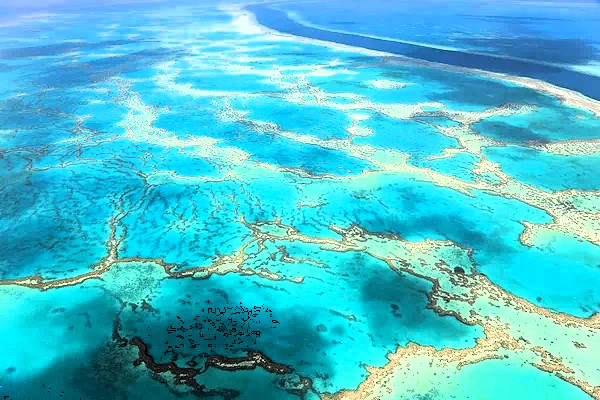
Helicopter or seaplane scenic flights: Seeing the Great Barrier from the air is a completely different and utterly breathtaking perspective. From above, you can appreciate the reef's true magnitude: infinite gradations of blue and turquoise, dark channels winding between coral formations, sandbars emerging at low tide, and of course Heart Reef, visible only from the air. Many operators offer combined packages with a scenic flight followed by snorkeling or diving on the reef.
When to visit the Great Barrier Reef
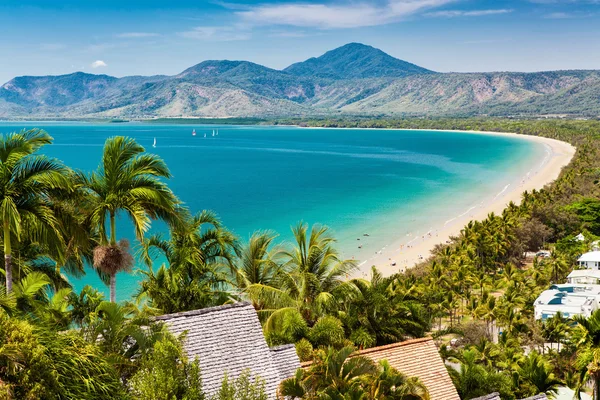
The ideal season to visit runs from June to October, coinciding with the austral winter and spring. During these months, air temperatures range between 19 and 27 degrees Celsius, water temperatures between 22 and 26 degrees, underwater visibility is excellent (often exceeding 20-30 meters), the sea is generally calm, and there is no dangerous jellyfish season.
From November to May (austral summer and autumn), the region enters its wet season with frequent rains that reduce water visibility, higher temperatures, and stifling humidity. But the most important caution during these months is the presence of venomous jellyfish, especially the box jellyfish and the irukandji, which are extremely dangerous. All tour operators provide stinger suits covering the entire body, and many coastal swimming areas install protective nets. Even so, the experience is considerably more pleasant during the dry season.
There is a particularly magical period between June and July, when humpback whales begin their annual migration to Great Barrier waters. Some operators offer whale swimming experiences during this time, something very few places in the world can offer.
Environmental threats: coral bleaching
It is impossible to discuss the Great Barrier Reef without addressing the environmental crisis it faces. Since 2016, the reef has suffered six mass coral bleaching events, the most recent in 2024-2025. Bleaching occurs when thermal stress caused by above-normal water temperatures forces corals to expel the zooxanthellae algae living inside them that provide food and color. Without these algae, the coral turns white and, if conditions do not improve within weeks, it can die.
The 2025 report from the Australian Institute of Marine Science (AIMS) documented the most spatially extensive bleaching since records began in 1986. In the southern third of the reef, coral cover dropped to just 26.9%, with declines representing the largest single-year loss in 39 years of monitoring. UNESCO ordered a full review of Australia's Great Barrier management in 2026, recognizing that current efforts are insufficient to protect this global icon.
However, the news is not all bleak. Corals possess a remarkable capacity for recovery when conditions improve. Areas that suffered severe bleaching in 2016-2017 showed signs of recovery in subsequent years with more favorable temperatures. The Great Barrier Reef Foundation and the Australian government have invested over 1 billion Australian dollars in conservation programs including coral restoration through nurseries and replanting, assisted evolution programs to develop heat-resistant coral strains, reducing agricultural runoff that pollutes coastal waters, and continuous monitoring through research stations and satellite technology.
How to be a responsible visitor
Visiting the Great Barrier Reef comes with an implicit responsibility. Every visitor pays an Environmental Management Charge of 8 Australian dollars per person per day, included in excursion prices, which directly funds reef research and protection programs. But beyond this financial contribution, concrete actions make a real difference.
Use only biodegradable sunscreen free of oxybenzone and octinoxate, chemicals that accelerate coral bleaching. Better still, cover your body with lycra or neoprene suits that provide complete UV protection without the need for creams. Never touch corals: even a seemingly innocent brush can damage decades of coral growth. Do not feed fish or chase turtles or any other marine creature. Always maintain a respectful distance. Pick up any rubbish you find in the water, even if it is not yours. And choose certified tour operators with ecological practices, such as those associated with Ecotourism Australia's ECO Certification program.
Practical tips for planning your trip
Budget: Day trips to the outer reef cost between 180 and 300 Australian dollars (approximately 110-185 euros) per person, including catamaran transport, onboard meals, full snorkeling equipment, and in many cases an introductory dive. Multi-night liveaboard cruises start from 500-700 AUD per night depending on luxury level and areas visited. Scenic helicopter flights over the reef cost between 200 and 600 AUD depending on duration and whether they include a pontoon landing.
What to bring: Swimwear, towel, light clothing for the boat, sunglasses with a strap, hat, underwater camera or waterproof phone case, motion sickness medication if you are susceptible (take it one hour before boarding), and of course reef-safe sunscreen. If you dive frequently, consider bringing your own mask and snorkel for hygiene and comfort.
Safety: Saltwater crocodiles inhabit the northern Queensland coast but are not found in open water or on tourist coral islands. Dangerous jellyfish are a real concern from November to May, but protective suits virtually eliminate the risk. Always follow guide instructions, stay with the group, and report any unusual creatures you spot.
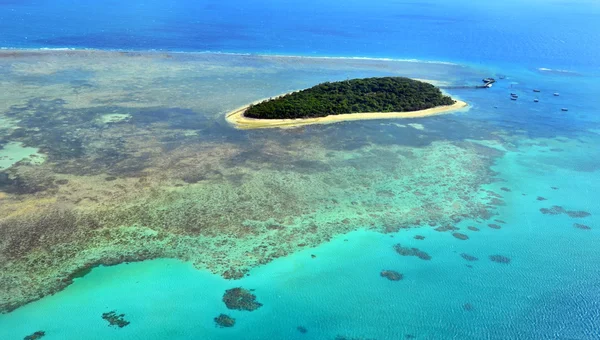
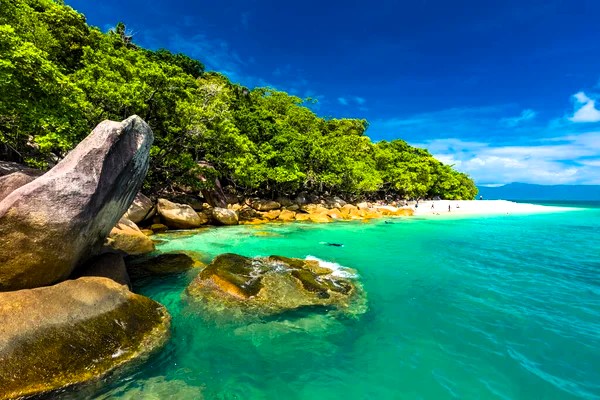
Recommended islands for families: Green Island, just 45 minutes by catamaran from Cairns, is ideal for families with young children. It offers calm beaches, rainforest trails, a wildlife park with crocodiles, and reefs accessible directly from shore. Fitzroy Island, a little further out, combines coral beaches with rainforest and a sea turtle rehabilitation center that delights younger visitors.
The Great Barrier Reef is not merely a tourist destination: it is a living reminder of our planet's beauty and fragility. Every visit to this reef is an opportunity to understand why it deserves protection, and to take away not just spectacular photographs, but a deep connection with the natural world that will last a lifetime.
If the Great Barrier Reef has captivated you, our 5-day Great Barrier Reef guide features detailed day-by-day itineraries with Google Maps, verified recommended operators, practical diving and snorkeling information, and the best excursions to make the most of your visit to this World Heritage Site.
Comments
Get the best travel tips
Subscribe to the Omyguide blog and never miss an article.
No spam. Unsubscribe anytime.