A practical guide to the Tokyo metro: everything you need to know
Navigate Tokyo's subway like a pro: Suica and Pasmo cards, key lines, etiquette and facts about the world's most punctual metro.
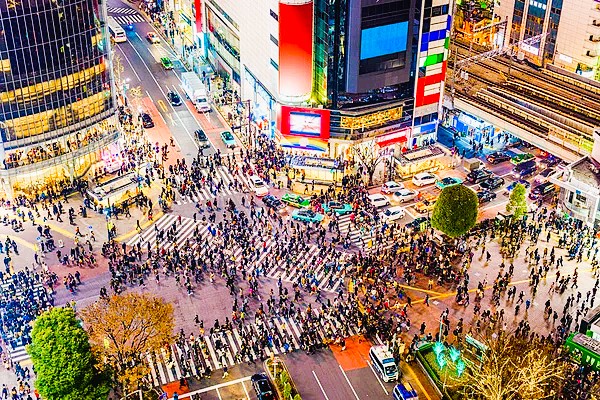
Tokyo is an immense city — more than 13 million inhabitants — and yet getting around it is surprisingly easy. The secret lies underground. Tokyo's metro and commuter rail system is one of the most extensive, efficient, and punctual on the planet, and once you understand how it works, the entire city opens up before you like a map of possibilities. This guide explains everything you need to know to navigate Tokyo by subway without getting lost, without overpaying, and without committing etiquette mistakes that might make locals uncomfortable.
A brief history: Asia's first subway
Tokyo has the honor of being home to the oldest subway line in all of Asia. The Ginza Line, which connects Shibuya with Asakusa across 14.3 kilometers and 19 stations, opened its first section between Asakusa and Ueno on December 30, 1927. The success was so immediate that passengers had to wait more than two hours for a five-minute ride. Since then, the network has never stopped growing. Today, Tokyo's underground system comprises two operators: Tokyo Metro, with 9 lines and 180 stations covering 195 kilometers of track, and Toei Subway, run by the metropolitan government, with 4 lines and 106 stations spanning 109 kilometers. In total, 13 subway lines, 286 stations, and over 300 kilometers of underground network — and that is without counting JR trains and private railway lines that complement the system.
Numbers that impress: punctuality and volume
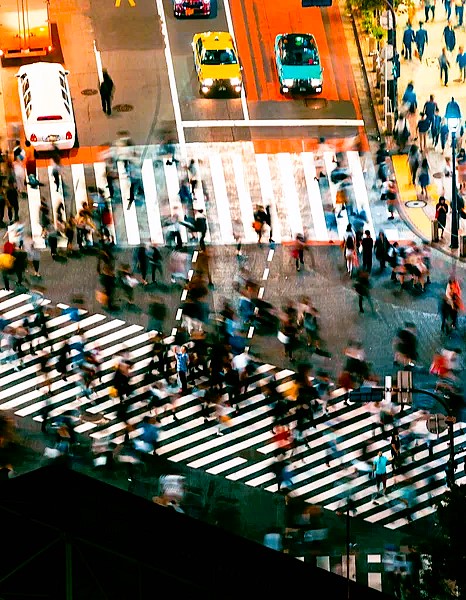
Tokyo Metro carries approximately 6.84 million passengers per day (fiscal year 2024 data), a figure that continues to recover post-pandemic and now stands at roughly 95% of pre-pandemic levels. When you add all the rail networks in the capital, Tokyo moves around 14 million people every single day. Shinjuku Station holds the Guinness World Record as the busiest railway station on Earth, with an average of 2.7 million daily passengers — more than four times the traffic of the Gare du Nord in Paris, Europe's busiest. The Tozai Line carries the highest volume, with approximately 1.2 million daily users.
But what truly astonishes is the punctuality. Japanese trains consider a departure on time if it occurs within 15 seconds of the scheduled time. The average delay per operational train is around 0.9 minutes, including incidents caused by natural disasters. If a train arrives more than one minute late, the company may issue official delay certificates for passengers to present at their workplaces. It is a level of precision that seems like science fiction.
Suica, Pasmo, and the IC card: your best ally
Forget individual tickets. The first thing you should do when arriving in Tokyo is get a rechargeable IC card: Suica (issued by JR East) or Pasmo (issued by metro and bus operators). Both work exactly the same way and are accepted on virtually all public transport in Tokyo — subway, JR trains, buses — as well as for payments at convenience stores such as 7-Eleven, FamilyMart, and Lawson, supermarkets, and many other shops.
If you have an iPhone, the easiest option is to download the Welcome Suica Mobile app, launched by JR East in March 2025. It lets you create a digital Suica card with no registration required, accepting international credit cards through Apple Pay. Since October 2025, the app even allows you to book and board Shinkansen bullet trains directly. If you prefer a physical card, you can purchase the Welcome Suica at JR East Travel Service Centers at Narita and Haneda airports. It is valid for 180 days and requires no deposit.
The lines you will use most as a tourist
You do not need to memorize all 13 lines. As a traveler, a handful will take you to virtually every point of interest:
The Ginza Line (orange, Tokyo Metro) is the classic: it connects Shibuya, Omotesando, the Ginza shopping area, Ueno, and Asakusa in a single route. It is perfect for crossing Tokyo from west to east. The Yamanote Line (green, JR) is technically not a subway but a commuter loop, yet it connects all the major stations — Shibuya, Shinjuku, Ikebukuro, Ueno, Tokyo, Shinagawa — and you will use it constantly. The Marunouchi Line (red, Tokyo Metro) links Shinjuku to Tokyo Station via Ginza, very handy for the city center. The Hibiya Line (grey, Tokyo Metro) connects Roppongi with Ueno and Asakusa. And the Oedo Line (magenta, Toei) traces a large underground loop passing through Roppongi, Tsukiji, and Shinjuku.
Each line has its own color and letter code (G for Ginza, M for Marunouchi, H for Hibiya, and so on), and every station has a number. So Shibuya on the Ginza Line is G-01 and Asakusa is G-19. This coding system makes navigation intuitive even without speaking Japanese.
Etiquette rules: what you should (and should not) do
The Tokyo metro runs with a harmony that depends on everyone respecting a set of unwritten but sacred rules. Silence: your phone must be on silent mode and phone calls are not made inside the carriage. Conversations between passengers are kept very quiet. Queues: on the platform you will see marks on the floor indicating where the doors open. People form two orderly lines on each side and wait for all passengers to exit before boarding. Skipping this rule is considered one of the worst breaches of manners. Food: eating and drinking is not done on commuter trains or the subway (long-distance trains like the Shinkansen are the exception). Backpacks: carry yours in front of your body or at your feet to avoid bothering other passengers. Priority seats: reserved for the elderly, pregnant women, people with disabilities, or those with small children — always give them up.
An important note: many lines run women-only carriages during the morning rush hour (generally until 9:00–9:30 a.m.). They are marked with pink signs on the platform and on the carriage doors.
Practical tips so you never get lost
Download the Google Maps or Navitime for Japan Travel app: both calculate subway routes with minute-by-minute precision, tell you which carriage to board, and which station exit is most convenient for your destination. Station names are written in Japanese, romaji (Latin alphabet), and English, so you will have no trouble identifying them. Always look for the line color and station number, not just the name. Avoid traveling between 7:30 and 9:00 a.m. if you can: it is rush hour and trains run at over 150% capacity on some lines. Finally, remember that the metro closes between midnight and 5:00 a.m. — plan your return to the hotel ahead of time.
Our 5-day Tokyo guide includes optimized daily itineraries with the best subway routes, Google Maps, must-visit restaurants in every neighborhood, weather information, and practical tips to make the most of the city. From Shibuya to Asakusa, with everything planned so you can simply enjoy.
Comments
Get the best travel tips
Subscribe to the Omyguide blog and never miss an article.
No spam. Unsubscribe anytime.