Afternoon tea in London: history, etiquette and the best venues to experience it
The complete history of afternoon tea in London: from the Duchess of Bedford to the finest tea rooms. Etiquette, tea types and practical tips.
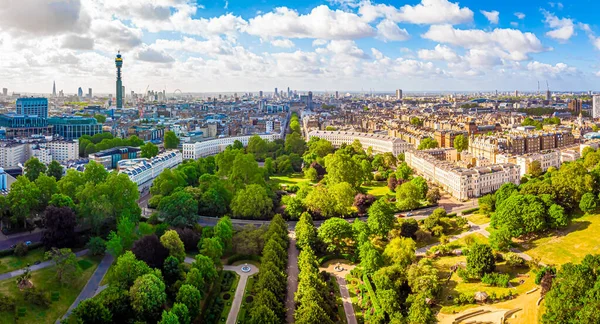
Few traditions distill a country's cultural identity as precisely as afternoon tea distills Britain's. Every afternoon, in silk-lined rooms with ornate ceilings across London, uniformed waiters unfold a ritual nearly two centuries in the making: three-tiered stands laden with tiny crustless sandwiches, warm scones with clotted cream and jam, meticulous pastries that resemble edible jewels, and tea poured from fine porcelain with the solemnity of a religious ceremony. But behind this liturgy of elegance lies a story that begins with something far more prosaic: the empty stomach of a bored duchess.
Anna of Bedford and the birth of a tradition
Sometime between 1830 and 1840, Anna Maria Russell, seventh Duchess of Bedford and lady-in-waiting to Queen Victoria, faced a problem shared by the entire Victorian aristocracy. The customs of the era dictated a light breakfast in the morning, lunch at midday, and dinner no earlier than half past seven or eight in the evening. Between lunch and dinner stretched a seven-hour desert that the duchess described as a 'sinking feeling': that sensation of emptiness and languor that overtakes the body in mid-afternoon when the stomach has gone too long without sustenance.
Her solution was as simple as it was transformative. Anna requested a tray of tea, bread and butter, and cakes be brought to her private quarters at Woburn Abbey, the Bedfords' country estate in Bedfordshire, around five in the afternoon. She found the snack so pleasant that she began inviting friends to share it. When the custom reached Queen Victoria, who embraced it enthusiastically, the seal was set: if the queen did it, all aristocracy had to follow.
Historians debate whether the duchess truly invented afternoon tea or merely codified an informal practice that already existed. What is beyond dispute is that Anna of Bedford gave structure, etiquette, and social status to what had been, at most, casual snacking between meals. Within two decades, afternoon tea went from private indulgence to social institution. Upper-class ladies competed for the most elegant tea rooms, the finest porcelain, the most sophisticated pastries. It became less about satisfying hunger and more about demonstrating taste, refinement, and standing.
Tea and empire: a colonial history
It is impossible to discuss afternoon tea without addressing how tea arrived in Britain, and that story is inseparable from colonialism. Tea entered the English court in 1662 through Catherine of Braganza, a Portuguese princess who married Charles II and brought with her the custom of drinking it. But for nearly two centuries, all tea consumed in Britain came from China, and the dependence was total.
In the early nineteenth century, the British East India Company, desperate to break China's monopoly, undertook one of history's greatest acts of botanical espionage. Robert Fortune, a Scottish botanist, was sent to China disguised as a merchant to steal tea plants, seeds, and the secrets of their processing. The plunder was transferred to India, where the British had already discovered wild-growing tea plants in Assam. The first commercial plantations were established in Assam in the 1830s, and in Darjeeling from 1841, when Archibald Campbell began cultivation trials in the Himalayan hills.
By the 1870s, India had displaced China as Britain's principal tea supplier. The human cost of this transformation was enormous: plantations operated with near-slave labour, forced workers living in deplorable conditions. The tea served in the delicate porcelain cups of London's tea rooms arrived soaked in exploitation. It is a historical reality worth remembering while enjoying an Earl Grey in the Ritz's Palm Court.
Tea types: what is inside the teapot
A proper afternoon tea offers a selection of teas allowing guests to choose according to mood and palate. These are the classics you will find in any London venue of standing:
Earl Grey is probably Britain's most iconic tea. Named after Charles Grey, second Earl Grey and Prime Minister in the 1830s, legend holds that a Chinese mandarin created the blend especially for him, adding bergamot oil to black tea to offset the lime in the water at Howick Hall, the Grey family seat in Northumberland. The result is an aromatic, floral, slightly citric tea that pairs perfectly with afternoon tea pastries.
English Breakfast is Earl Grey's antithesis: robust, malty, no frills. It is a blend of black teas from Assam, Ceylon, and sometimes East Africa, designed in the nineteenth century to accompany hearty English breakfasts. It takes milk well and has enough body not to vanish between a bite of smoked salmon and one of cucumber sandwich.
Darjeeling, known as the 'champagne of teas', comes from the Himalayan slopes of West Bengal. Light, muscatel, with floral notes that make it ideal for drinking without milk. It was the Duchess of Bedford's favourite tea, which closes a neat historical circle.
Assam is British tea's workhorse: strong, dark, full-bodied. It comes from the Brahmaputra Valley in northeast India, where the British discovered wild tea plants in the 1820s. It forms the base of many English Breakfast blends and is the tea you would likely be drinking if you ordered a 'builder's tea' at any British roadside cafe.
The three-tiered stand: anatomy of an afternoon tea
An authentic afternoon tea follows a rigid structure presented on a three-tiered stand, each level with its own logic and protocol:
Bottom tier: sandwiches. Always crustless, always tiny, always cut into triangles or rectangles with geometric precision. Classic fillings include cucumber with butter and a touch of mint (the most British of all), smoked salmon with cream cheese, egg with watercress, ham with Dijon mustard, and coronation chicken. The bread should be so thin it is nearly translucent. Eating them in two bites is correct; in one, it is considered vulgar.
Middle tier: scones. The true heart of the ritual. A good scone should be warm, freshly baked, with a lightly golden crust and a fluffy interior. Served with clotted cream (a thick, rich cream from Devon, denser and more unctuous than whipped cream) and strawberry jam. And here arrives one of British culture's great debates.
In Devon, cream goes first on the scone with jam on top: the Devon cream tea. Devonians argue that clotted cream's buttery consistency makes it the equivalent of butter, and one would never put jam before butter. In Cornwall, jam goes first with cream crowning the top: the Cornish cream tea. The Cornish maintain that clotted cream is the crowning glory and deserves the topmost position, visible and glorious. The rivalry is real and centuries-old; do not make the mistake of choosing sides aloud if you find yourself in either county. In London, the official position is diplomatic: do as you please, but never cut the scone with a knife. Break it with your hands.
Top tier: pastries and sweets. Here the pastry chef's creativity overflows: mini chocolate eclairs, lemon meringue tartlets, macarons, petit fours, red velvet cake, almond financiers. Small, elaborate, perfect. Convention dictates eating from bottom to top, savoury to sweet, but no one will arrest you for starting wherever you like.
Etiquette: myths and truths
Afternoon tea etiquette is not as strict as popular imagination suggests, but there are some unwritten rules worth knowing, if only to break them with full awareness.
The pinky finger myth. No. The pinky does not go up when drinking tea. It never did. This idea probably stems from the fact that the first Chinese tea sets arrived without handles, and the proper way to hold the cup was with thumb and index and middle fingers, leaving the pinky slightly raised for balance. When cups began to be made with handles, the gesture lost its purpose. Today, raising the pinky is considered affected, not elegant.
The milk debate. Does milk go in the cup first or after the tea? This seemingly trivial question is actually a historical marker of social class. Poorer families used earthenware or soft-paste porcelain that could crack with boiling water, so they poured cold milk in first as a coolant. The aristocracy drank from fine bone china that withstood heat without issue, and adding milk last was a deliberate way of showing their cups did not break. Today science weighs in: pouring cold milk into hot tea heats the milk unevenly, denaturing its proteins and affecting flavour. So technically, milk first (the poor person's method) produces better-tasting tea.
Other less debated but equally important norms: the napkin goes on the lap folded in half; do not blow on hot tea (wait instead); the spoon stays on the saucer, never inside the cup; tea is stirred not in circles but with a gentle back-and-forth motion from twelve to six o'clock; and, naturally, nothing is dunked in the tea.
Afternoon tea, high tea and cream tea: the universal confusion
This is perhaps the most widespread confusion among visitors. Afternoon tea is the elegant ritual described above: sandwiches, scones, pastries, tea, porcelain, between three and five in the afternoon. High tea, despite what its name suggests, is not a more luxurious version. It is the exact opposite.
High tea originated as the British working class's meal in the late nineteenth century. Workers who could not afford the luxury of sitting at four in the afternoon to eat crustless sandwiches took a substantial meal upon returning from work, between five and seven, seated at the high dining table (hence 'high': for the table's height, not its status). The menu included bread, cold or hot meat, cakes, cheese, eggs, and large quantities of strong black tea with milk and sugar. It was fuel, not ceremony.
Cream tea is the simplified version: just scones with clotted cream and jam, accompanied by tea. Popular in Devon and Cornwall, far more affordable (between 15 and 20 pounds), and less ceremonial. Perfect for those who want to taste the experience without investing two hours or a dinner's budget.
London's great tea rooms
The Ritz. The Palm Court is probably the world's most famous tea room. Golden columns, mirrors, a live pianist, and service approaching ceremonial perfection. It offers 18 loose-leaf tea varieties, ruler-straight sandwiches, and scones emerging from the oven every fifteen minutes. The dress code is strict: jacket and tie required for gentlemen, jeans and sportswear prohibited for all. From 95 pounds per person. Five daily sittings (11:30, 1:30, 3:30, 5:30, and 7:30), with the 3:30 slot booking out months ahead. Reserve at least eight weeks in advance.
Claridge's. Art Deco at its finest, with that perfect balance of opulence and discretion that only the British achieve. The Foyer, with its grand mirror and filtered light, offers a more relaxed afternoon tea than the Ritz but equally refined. Their carrot cake is legendary among regulars. From 85 pounds, with champagne option from 95. Book a month ahead.
The Savoy. The Savoy has been serving afternoon tea since 1889, making it one of London's most historically rich venues. Currently served in The Gallery, beneath a stained-glass dome, with live piano and a menu of over 30 tea varieties. It offers traditional, vegetarian, vegan, and children's menus. From 7 PM, the Twilight Tea transforms the experience into a chic evening ritual with sparkling wine included. From 75 pounds.
Fortnum & Mason. The Diamond Jubilee Tea Salon, on the fourth floor of London's most famous tea shop (founded 1707), is probably the most accessible option for a first experience. Mint-green and gold decor, a less intimidating atmosphere than the grand hotels, and naturally, an unmatched tea selection. From 84 pounds per person. Being inside a shop allows combining afternoon tea with purchasing teas, jams, and biscuits to take home.
Sketch. For those seeking Instagram over tradition. Sketch's Gallery, designed by artist David Shrigley, is a pastel pink room covered in satirical illustrations, with bathrooms that are egg-shaped space capsules. The afternoon tea is competent (chef Mourad Khiat's pastries are excellent) but people come mainly for the setting. From 75 pounds with a glass of champagne. Very millennial.
Modern interpretations: from veganism to Harry Potter
Afternoon tea has shown remarkable adaptability. In recent years, offerings have diversified to capture new audiences. Vegan afternoon teas are now standard at most major hotels, with scones made from oat milk and plant cream that optimists claim are nearly indistinguishable from the originals. The Savoy was a pioneer in offering a fully vegan menu.
Themed versions proliferate: the Georgian House Hotel offers a Harry Potter-inspired afternoon tea served in a basement simulating a Hogwarts potions classroom. Several hotels offer 'gentleman's afternoon tea', replacing sweets with meat pies, artisan cheeses, and whisky. At Christmas, menus transform with mince pies, panettone, and hot punch. And during Wimbledon, strawberries and cream integrate into the service with the ease of a centuries-old custom.
Modern Londoners, however, rarely have afternoon tea in their daily lives. It is expensive (you will struggle to spend less than 70 pounds per person), requires at least two hours seated, and the logistics of booking weeks ahead make it an event, not a habit. The British reserve it for special celebrations: birthdays, hen parties, anniversaries, or that obligatory visit with grandmother that happens twice a year at most.
Practical tips for your first afternoon tea
- Always book. Major venues require reservations weeks or months in advance. The Ritz can fill up two months ahead for popular time slots.
- Dress code. The Ritz and Claridge's are strict. Fortnum & Mason and The Savoy are more relaxed but expect smart casual at minimum. Never flip-flops, never tracksuits.
- Do not eat lunch beforehand. A full afternoon tea equals a substantial meal. Arriving on a full stomach wastes the experience and the money.
- Ask for leftovers to go. Most venues offer a bag for pastries and scones you could not finish. It is not rude to ask; it is expected.
- Budget 70 to 100 pounds per person. With champagne, easily over 100. Service charge is usually not included: 12.5% is standard.
- If you have dietary restrictions, mention them when booking. Most venues offer gluten-free, vegetarian, and vegan options but need advance notice.
More than tea: a mirror of British culture
Afternoon tea has survived two world wars, sugar rationing, the coffee revolution, gastronomic globalisation, and hotel lounge gentrification. That it persists, nearly unchanged in its essential structure, says something profound about the British relationship with their rituals. It is not nostalgia: it is the conviction that some things are done better when done slowly, with order, and with a good cup of tea before you.
Sitting in the Ritz's Palm Court or Fortnum & Mason's Diamond Jubilee is to participate, even as a tourist, in a tradition connecting Victorian aristocracy with contemporary London, Assam plantations with Mayfair tea rooms, a duchess's hunger with the world's most refined luxury industry. And if it turns out you are simply eating crustless sandwiches and expensive pastries while drinking tea from a pretty cup, well, that is fine too. Sometimes civilisation consists of exactly that.
If you plan to explore London beyond tea, our 5-day London guide includes detailed neighbourhood itineraries, tube maps, tips to skip museum queues, and the best fish & chips in each area.
Comments
Get the best travel tips
Subscribe to the Omyguide blog and never miss an article.
No spam. Unsubscribe anytime.