The Berlin Wall: the scar that divided the world
From the night Berlin split in two to the night a million reunited it. History of the Wall and its remains today.
Berlin is the only major European capital that lived through the twentieth century physically cut in half. Not metaphorically, not politically — literally. For twenty-eight years, a concrete wall stretching 155 kilometers divided streets, severed subway lines, separated families, and turned one city into the starkest symbol of the Cold War. Today, more than three decades after its fall, fragments remain scattered across the city like scars that refuse to fade. Understanding the Wall is not merely a history lesson: it is the only way to truly understand Berlin.
August 13, 1961: the night Berlin woke up divided
The operation began just after midnight on the night of Saturday, August 12 to Sunday, August 13, 1961. While Berliners slept, soldiers from the German Democratic Republic rolled out kilometers of barbed wire along the line separating the Soviet and Western sectors. By dawn, the city was severed. There was no warning. Families living one street apart discovered upon waking that they could no longer cross. On Bernauer Straße, where the border ran right along the building facades, people leapt from their apartment windows into the Western sector — some were caught midair by West Berlin firefighters, others were not so fortunate. Over the following days, the wire became concrete blocks, and the blocks became a wall 3.6 meters high running 43.1 kilometers through the city center. The East German government’s official justification was that it was an “anti-fascist protection barrier.” The reality was simpler: since 1949, nearly three million people had fled west, and the hemorrhage threatened to empty the country.
Living with the Wall: the death strip and the escape attempts
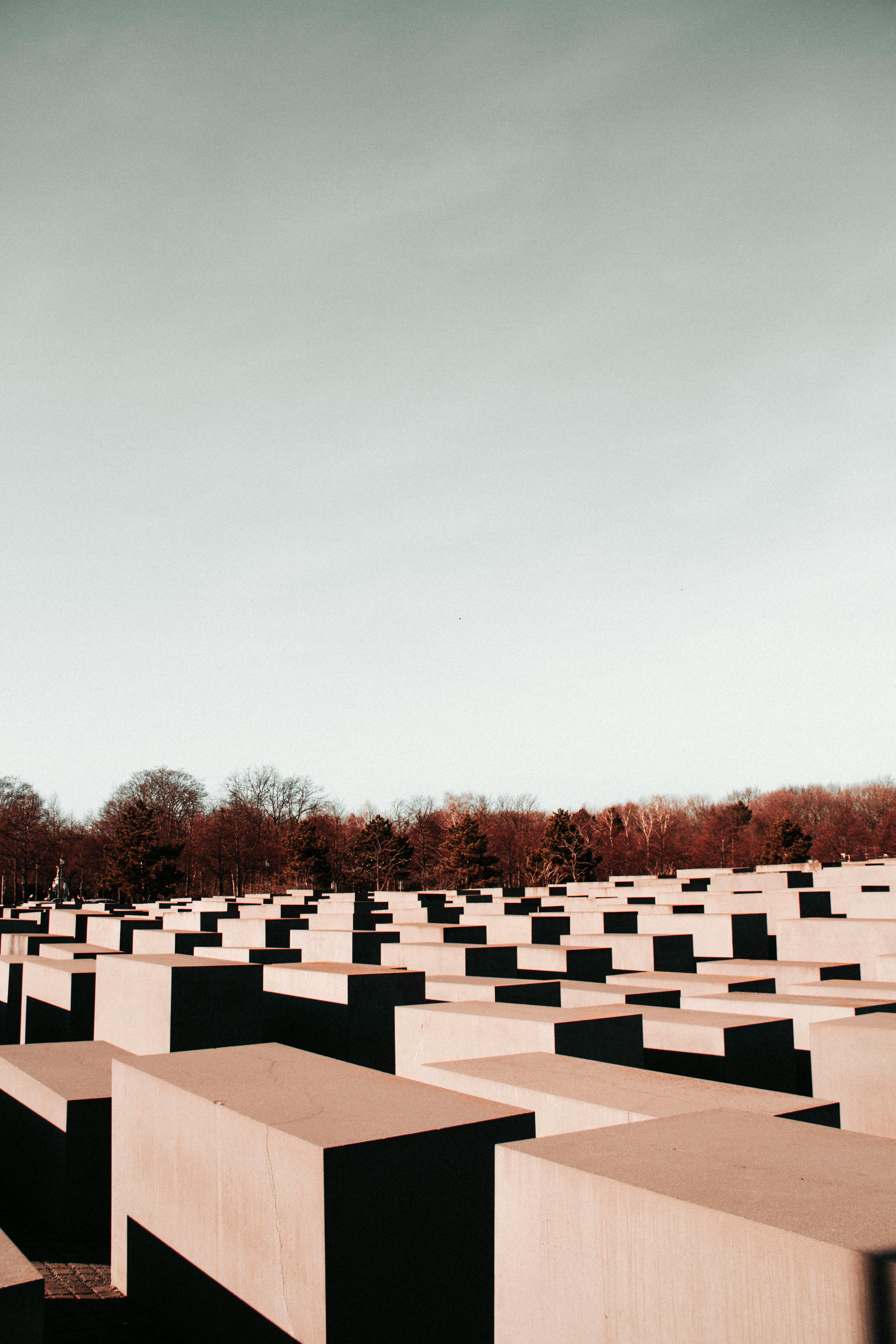
The Wall was not a wall: it was a system. Between the eastern face and the western face lay the so-called death strip, a zone 30 to 150 meters wide equipped with barbed wire, dogs, watchtowers, floodlights, and soldiers under orders to shoot to kill. Still, people tried. More than seventy tunnels were dug beneath the border. There were escapes in homemade hot-air balloons, in car trunks with secret compartments, in suitcases, swimming through canals, and even sliding along a makeshift zip line from a rooftop. Approximately 140 people died in the attempt — the exact number remains under investigation, but the Berlin Wall Memorial on Bernauer Straße documents every known case. The toll includes those who were shot, who drowned in the Spree, or who fell jumping from buildings. The youngest was one year old: a baby who died of hypothermia during a failed escape. Meanwhile, daily life adapted to the absurd. Subway lines that crossed into the East kept running, but stations in eastern territory were sealed and became ghost stations where trains passed without stopping. Separated families waved at each other through binoculars from rooftops.
November 9, 1989: the night the Wall fell
The fall of the Wall was, paradoxically, an accident. On November 9, 1989, Günter Schabowski, the East German government spokesman, held a press conference announcing new travel regulations that would allow Eastern citizens to apply for permits to cross to the West. When a journalist asked when the regulations took effect, Schabowski shuffled through his papers with a confused expression and answered: “Immediately, without delay.” It was not true — the regulations had restrictions and were not meant to apply until the following day — but the news was broadcast live on Western television. Within hours, thousands of East Berliners crowded the border checkpoints. The guards, lacking clear instructions and overwhelmed by the crowd, opened the barriers shortly before midnight. What followed was one of the most extraordinary nights of the twentieth century: strangers embracing atop the Wall, champagne, tears, families reuniting after decades, people with hammers and chisels hacking off chunks of concrete as souvenirs. Kennedy’s speech — “Ich bin ein Berliner,” delivered on June 26, 1963, beside the Wall — and Reagan’s demand — “Mr. Gorbachev, tear down this wall!” delivered on June 12, 1987, in front of the Brandenburg Gate — had foreshadowed that moment. But nobody imagined it would arrive like this, without a single shot, because of a sentence botched at a press conference.
Where to see the Wall today
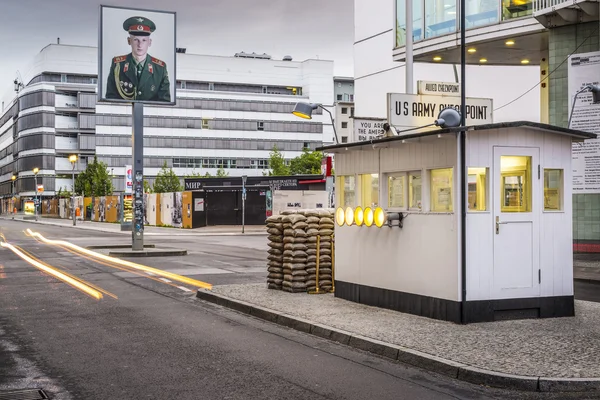
The Wall was dismantled with the same urgency with which it was built, but enough sections remain to grasp what it meant. The most powerful site is the Berlin Wall Memorial on Bernauer Straße, where an original section is preserved with the death strip intact: both walls, the no-man’s-land, the watchtowers. A chapel marks the spot of the Church of Reconciliation, which the East German government demolished in 1985 because it stood within the strip. The East Side Gallery is the longest surviving stretch: 1.3 kilometers of wall along the Spree, painted in 1990 by 118 artists from 21 countries. It is the largest open-air art gallery in the world, and among its most famous murals is the kiss between Brezhnev and Honecker by Dmitri Vrubel. Then there is Checkpoint Charlie, the most famous crossing point between East and West, now one of Berlin’s most touristic intersections. The original guardhouse is in the Allied Museum, but the replica on Friedrichstraße — with the portraits of the Soviet and American soldiers facing each other — remains a striking image.
Berlin today: the reunited city
More than thirty-five years after the fall, Berlin is still processing its legacy. The differences between East and West have not entirely vanished — Berliners have a phrase, Mauer im Kopf (the wall in the head), to describe the invisible barriers that persist — but the city has turned its trauma into identity. Where there was once no-man’s-land there are now parks. Where watchtowers stood there are now cafés. The Reichstag, whose glass dome designed by Norman Foster lets citizens look literally over the heads of their representatives, is perhaps the finest symbol of that transformation: an imperial building destroyed by fire, divided by the Wall, and rebuilt as the seat of reunified democracy. Berlin does not hide its scars. It puts them on display. And that is why it is one of the most fascinating cities in Europe.
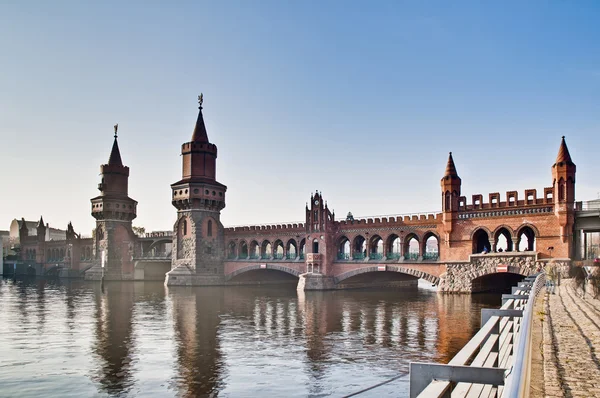
If the story of the Wall has left you eager to explore Berlin in depth, our 5-day Berlin guide includes itineraries with Google Maps covering every Wall-related site, the best museums, neighborhoods steeped in history, Berlin cuisine, and practical transport tips so you can see the city without wasting time.
Comments
Get the best travel tips
Subscribe to the Omyguide blog and never miss an article.
No spam. Unsubscribe anytime.