Bordeaux, wine capital of the world: history, terroir and culture
From the Miroir d'Eau to the vineyards of Saint-Émilion. Everything you need to know about Bordeaux wine culture.
Some cities are defined by a monument, others by a river, a few by their food. Bordeaux is defined by wine. Not metaphorically: this city’s history is literally written on its bottle labels. Ever since the Romans planted the first vines in the first century, the fate of Bordeaux and its vineyards have been inseparable. Today, with more than 111,000 hectares under vine and some sixty appellations, the region produces around 700 million bottles a year. But Bordeaux is not just about quantity: it is the place where wine became art, science and, for some, religion.
The 1855 classification: the day the wine world was ranked
It all started with a fair. In 1855, Emperor Napoleon III requested a classification of Bordeaux’s finest wines for the Paris Exposition Universelle. The region’s wine brokers drew up a ranking based on each château’s price and reputation — no visits, no tastings, no sample requests. The result was a five-tier hierarchy of crus encompassing 61 châteaux. At the top, four Premiers Grands Crus Classés: Lafite Rothschild, Latour, Margaux and Haut-Brion — the last being the only one not from the Médoc but from Graves. The extraordinary thing is that this classification remains in force more than 170 years later, virtually unchanged. There have been only two amendments: the addition of Cantemerle as a fifth growth in 1856 and, most famously, the promotion of Château Mouton Rothschild from second to first growth in 1973, after decades of determined campaigning by Philippe de Rothschild.
Left bank, right bank: two worlds in one bottle
The Garonne and the Dordogne divide the Bordeaux wine region into two universes with opposite personalities. On the left bank — home to the Médoc, Graves, Pessac-Léognan and Sauternes — gravel soils dominate, draining well and forcing vines to dig deep for water. Here Cabernet Sauvignon rules, typically making up 60% to 85% of the blend, producing tannic, structured wines with aromas of blackcurrant and cedar that need years of ageing to reveal their true character. On the right bank — Saint-Émilion, Pomerol, Fronsac — clay and limestone soils retain more moisture, and Merlot reigns, sometimes reaching 90% of the blend. The result is rounder, silkier wines with notes of plum and truffle that tend to be approachable sooner. This is a simplification, of course — there are brilliant exceptions on both sides — but grasping this basic divide is the key to beginning to decode Bordeaux.
Saint-Émilion: wine and ancient stone
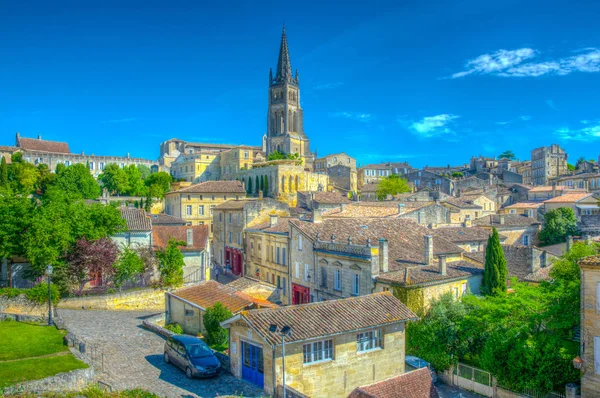
Forty minutes by car from Bordeaux, Saint-Émilion is proof that a town of fewer than two thousand inhabitants can hold more history than a capital city. In 1999, the Jurisdiction of Saint-Émilion became the first vineyard in the world inscribed on the UNESCO World Heritage List, a recognition not just of wine but of a cultural landscape forged over two thousand years. Cobblestone streets wind between golden limestone houses, underground cellars carved into rock and a monolithic church hewn directly from a cliff between the eighth and twelfth centuries. Some of the planet’s most sought-after wines are made here — Château Ausone, Château Cheval Blanc, Château Angélus — but there are also family-run estates where you can taste an excellent Grand Cru at a reasonable price if you know where to look.
La Cité du Vin: the museum that looks like a wine glass
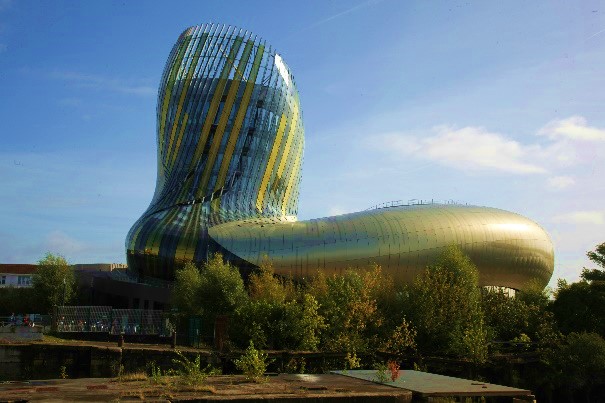
Opened on 1 June 2016, La Cité du Vin is the most ambitious museum ever devoted to wine. Designed by architects Anouk Legendre and Nicolas Desmazières of the Parisian studio XTU, the building is unmistakable: a curving structure of aluminium and glass that evokes wine swirling in a glass — or the gnarled knot of a vine, depending on interpretation. The permanent exhibition covers 3,000 square metres and traces the history of wine across every civilisation, from ancient Georgia to California’s Napa Valley, with interactive installations, immersive projections and scent stations where visitors learn to identify aromas. The visit ends on the eighth-floor belvedere, where a glass of wine is included in the ticket price and views stretch across the vineyards and the Garonne. This is not a museum about Bordeaux: it is a museum about why humans have spent six thousand years obsessed with fermented grape juice.
The en primeur system: buying the future
Bordeaux invented something the stock market would copy centuries later: wine futures. The en primeur system, which has existed since the eighteenth century but opened to private buyers in the 1980s, works like this: every spring, critics and buyers travel to Bordeaux to taste barrel samples — wines that have not yet been bottled and will not be delivered for at least 18 months. Based on those tastings, châteaux set a release price and buyers place their bets. It is a game of trust, information and instinct: if the vintage turns out to be exceptional, you will have secured a treasure at launch price. If not, you may have paid in advance for a wine you could find cheaper two years later.
Visiting châteaux: a practical guide
Not every Bordeaux château requires a reservation or costs a fortune. In Pauillac, Château Lynch-Bages offers tours with tasting from fifteen euros; in Margaux, Château Prieuré-Lichine is one of the few Grand Cru Classé estates accepting walk-ins. Saint-Julien and Listrac have family wineries where the winemaker personally pours your glass. The best strategy is to rent a bicycle in Pauillac and ride through the Médoc vineyards at your own pace: the terrain is flat, distances short and the landscape hypnotic.
Arcachon and oysters: the perfect day trip
Less than an hour from Bordeaux, the Bay of Arcachon is where locals spend their weekends. At Cap Ferret the oyster shacks serve oysters pulled straight from the water with a glass of white Pessac-Léognan: the most perfect pairing that exists. The Dune of Pilat, Europe's tallest at 110 meters, offers breathtaking views of the Atlantic and the pine forest. It deserves a full day: oysters in the morning, the dune at midday, beach in the afternoon.
Bordeaux beyond wine: UNESCO architecture and food pairings
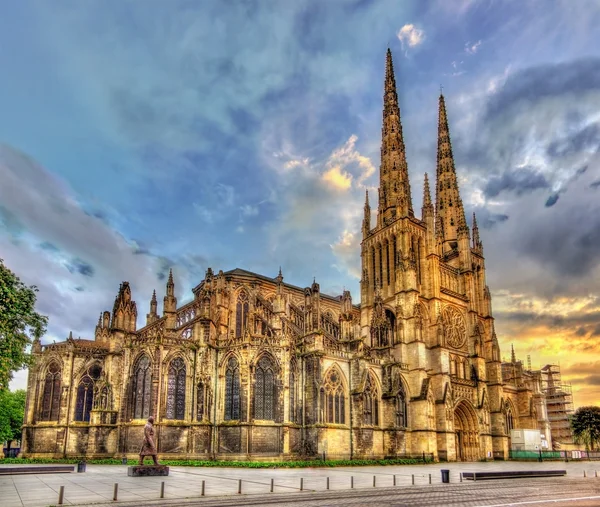
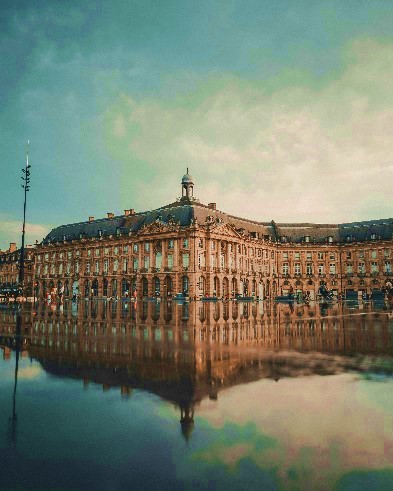
In 2007, UNESCO inscribed the historic centre of Bordeaux — known as the Port of the Moon — as a World Heritage Site, recognising 1,810 hectares of outstanding urban ensemble with more protected buildings than any French city apart from Paris. The Place de la Bourse, an eighteenth-century jewel commissioned by Louis XV, is reflected today in the Miroir d’Eau, the world’s largest water mirror (3,450 m²), inaugurated in 2006 by landscape architect Michel Corajoud. The Cathédrale Saint-André, consecrated in 1096 by Pope Urban II, was the setting for the wedding of Eleanor of Aquitaine to the future Louis VII in 1137 and is a stop on the Camino de Santiago route. And the Porte Cailhau, built between 1493 and 1496 to celebrate Charles VIII’s victory at Fornovo, is the city’s most elegant medieval gate, standing 35 metres tall where Gothic meets Renaissance.
To complete the experience, Bordeaux gastronomy offers perfect pairings: entrecote à la bordelaise with a Médoc, Arcachon oysters with a white Graves, foie gras with a Sauternes and cannelés — those small caramelised pastries of vanilla and rum — with a glass of Crémant de Bordeaux. Wine here is not an accompaniment: it is the axis around which the entire table revolves.
If Bordeaux has piqued your curiosity, our Bordeaux weekend guide includes day-by-day itineraries with Google Maps, recommended restaurants by area, practical transport information and the best tips for exploring the vineyards without a car.
Comments
Get the best travel tips
Subscribe to the Omyguide blog and never miss an article.
No spam. Unsubscribe anytime.