Eating in Rome: the definitive guide to Roman cuisine
From carbonara and cacio e pepe to artisan gelato, the Spritz aperitivo ritual and Castelli Romani wines: your complete guide to eating in Rome.
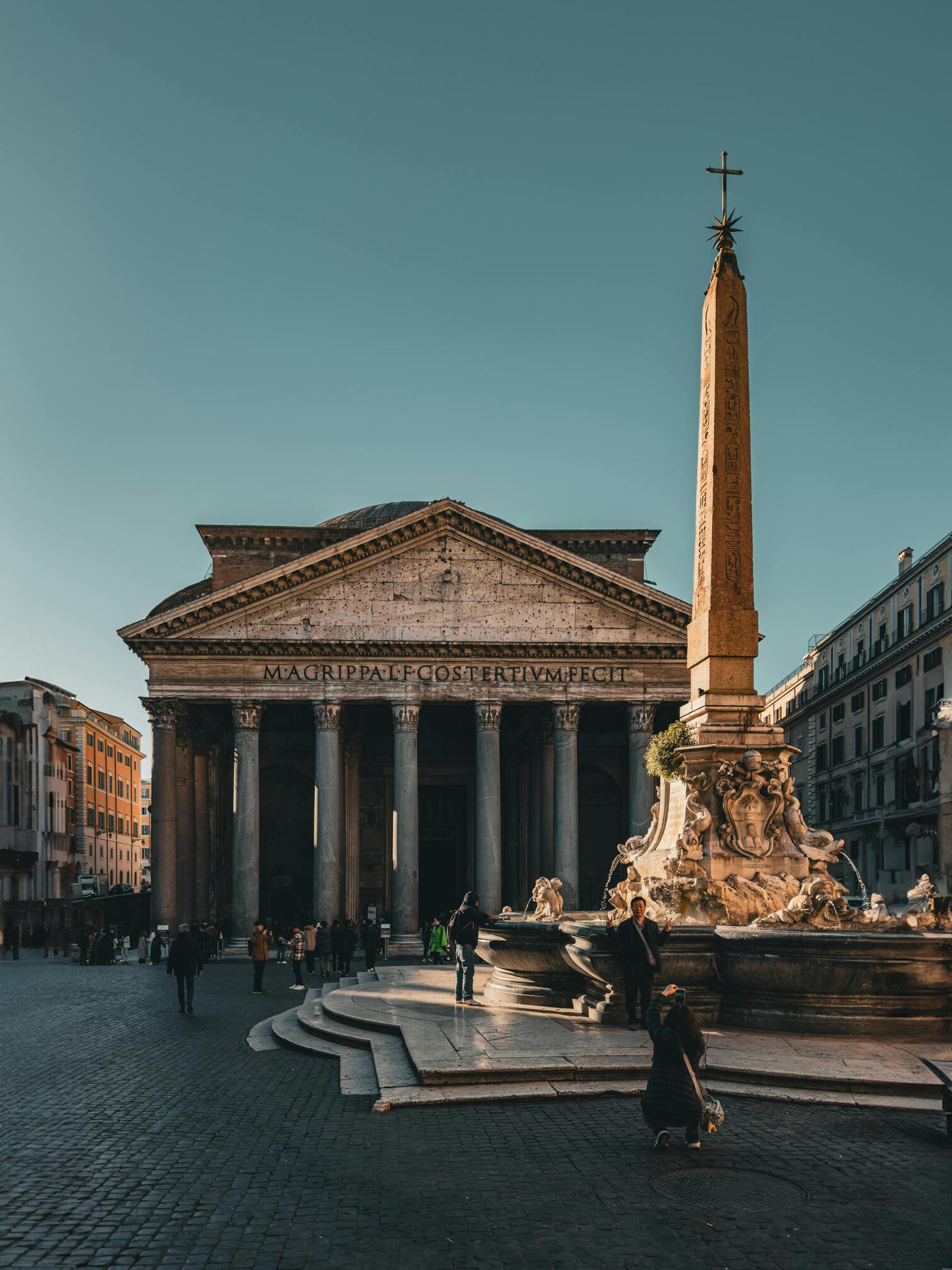
There are cities you visit and cities you eat. Rome belongs to the second category with a conviction no other European capital can match. Here food is not a side note to the trip but its very reason for being, a language Romans master as naturally as they gesticulate when they talk. And the most surprising thing is that Roman cooking never tries to impress with complicated techniques or exotic ingredients: its greatness lies in radical simplicity, in blind trust in four or five quality products, and in centuries of tradition nobody dares contradict. In Rome you do not eat well by accident. You eat well because they have spent two thousand years perfecting the art of turning the simple into the sublime.
The four sacred pastas of Rome
If anything defines Roman culinary identity, it is the four classic pastas. They are not simply Italian dishes: they are Roman to the marrow, and a Roman will let you know if you make the mistake of treating them as generic national recipes.
Cacio e pepe is the mother of them all. Only three ingredients: pasta — traditionally tonnarelli —, pecorino romano and black pepper. Nothing else. The secret lies in emulsifying the cheese with the cooking water, a process that looks simple but has humiliated thousands of professional cooks. The sharp, aged pecorino melds with the starch of the water to create a silky cream that coats every strand. It is a dish that has existed since shepherds of Lazio carried cured cheese and pepper in their saddlebags — ingredients that would not spoil during long days of transhumance.
Gricia is the natural evolution: to the cacio e pepe base you add guanciale — cured pork jowl, not pancetta, never bacon. The name may come from Grisciano, a village in the province of Rieti, or from the Swiss-origin grison bakers who worked in Rome. What is certain is that gricia is the bridge between cacio e pepe and the other two great dishes, and that it existed long before tomatoes arrived from the Americas.
Amatriciana adds tomato to the gricia equation. Its name comes from Amatrice, a town in northern Lazio that for centuries belonged to Abruzzo. The amatriciani who migrated to Rome brought this recipe, which the capital adopted as its own. It is made with guanciale, San Marzano tomatoes, pecorino romano and, optionally, a hint of chili. The classic pasta for serving it is bucatini, those thick spaghetti with a hole through the center that trap the sauce like little flavor tunnels.
And carbonara, the youngest and the most controversial. Unlike the others, carbonara is an urban dish that probably emerged after World War II, when eggs and bacon from American rations collided with the local tradition of guanciale and pecorino. The authentic recipe calls for egg yolks — not whole eggs, or at least more yolks than whites —, crispy guanciale, pecorino romano and black pepper. No cream, no onion, no garlic. Any Roman who sees you add cream to a carbonara will feel genuine physical pain.
Suppli: the Roman croquette that is not an arancino
If a Sicilian hears you call a suppli an arancino, prepare for a thirty-minute debate. The Roman suppli is oval, smaller than its Sicilian cousin, and its heart hides a treasure of melted mozzarella that stretches into threads when you break it in half. That is why they call it suppli al telefono: the cheese threads recall an old telephone cord. It is made with rice in tomato sauce, coated in egg and breadcrumbs, and fried until golden. The Sicilian arancino, by contrast, is larger, often conical — imitating the shape of Etna —, filled with ragu and peas, and breaded with a different technique. They are cousins, but each with its own personality and regional pride. Suppli appear in virtually every Roman pizzeria as an antipasto, and eating one freshly fried, standing by the counter, is one of the small pleasures that define Roman street life.
Pizza al taglio vs pizza tonda
Two radically different pizza philosophies coexist in Rome. Pizza tonda is the round Roman pizza: razor-thin base, crispy as a cracker, with almost nonexistent edges. It has nothing to do with Neapolitan pizza — thick, soft, with a puffy cornicione. The Roman version is eaten crispy, dry, and every bite crunches. It is the pizza of trattoria dinners, the pizza of tradition.
But the real queen of the Roman midday is pizza al taglio — literally, by the cut. Prepared on large rectangular trays, cut with scissors and sold by weight. The dough is completely different: honeycombed, airy, with long fermentations of up to 72 hours that create a spongy interior and crispy exterior. Gabriele Bonci revolutionized this format from his Pizzarium in the Prati neighborhood, opened in 2003, elevating what many considered junk food to the status of high-end street gastronomy. Bonci uses organic stone-ground flour and creates seasonal combinations that have redefined what pizza al taglio can be. Today the best establishments offer constant rotation: from the classic margherita to creations with zucchini flowers, anchovies, mortadella with pistachio or burrata with cherry tomatoes. If a tray has been out of the oven for more than twenty minutes, something is wrong.
Carciofi: the battle between Romans and Jews
The artichoke is Rome's sacred vegetable, prepared in two ways that represent two centuries-old traditions. Carciofi alla romana was born as a peasant dish: artichokes are opened in the center, stuffed with a mix of mentuccia — a local aromatic herb similar to mint —, garlic, parsley, salt and pepper, then slowly braised in olive oil and white wine. The result is tender, aromatic, comforting.
Carciofi alla giudia is another story. This dish was born in the Jewish ghetto of Rome, established in 1555 when the Pope forced Roman Jews to live in a closed quarter by the Tiber. Within those walls an extraordinary cuisine grew, shaped by kosher laws: olive oil replaced lard, and from that restriction was born a frying technique that turned the artichoke into an edible sculpture. Carciofi alla giudia are fried twice until the leaves open like the petals of a golden, crispy flower. It was traditionally prepared by Jewish Roman women to celebrate the end of Yom Kippur. Today it can be enjoyed in restaurants of the former ghetto, where Jewish-Roman cuisine lives on with dishes like fried baccala fillets, concia di zucchine and tortino di aliciotti with endive.
The coffee ritual: non-negotiable rules
Coffee in Rome is not a drink: it is a system of unwritten laws every visitor should know to avoid looks of pity. Espresso is taken standing at the bar, in two or three sips, and costs less than sitting at a table — that is law across Italy. You order it simply as a caffe; saying espresso is unnecessary, because in Rome every coffee is espresso by default.
Cappuccino is exclusively a breakfast drink. Italians believe that hot milk interferes with digestion, especially after a heavy meal of meat, cheese or pasta. Ordering a cappuccino after eleven in the morning is an instant tourist marker. After lunch, the acceptable option is a caffe — black, no milk — or at most a caffe macchiato, stained with just a drop of foam.
The cornetto accompanies the breakfast cappuccino: sweeter and softer than the French croissant, sometimes filled with pastry cream, jam or Nutella. It is all a Roman needs to start the day. No scrambled eggs or avocado toast. Sweet, quick, standing up, and off to work.
Aperitivo: the Roman art of drinking before dinner
The aperitivo is far more than a pre-dinner drink. It is a social ritual Romans practice religiously between six and nine in the evening, the bridge between the workday and dinner — which in Italy rarely starts before nine. The word comes from the Latin aperire, to open, and the idea is precisely that: to open the appetite and open the conversation.
The Aperol Spritz dominates Roman terraces with its unmistakable orange hue: Aperol, prosecco and a splash of soda, served in a wine glass with an orange slice. The Negroni, born in Florence in 1919 when Count Camillo Negroni asked the bartender to strengthen his Americano by replacing the soda with gin, is the choice for those who prefer something more bitter and robust: equal parts gin, Campari and red vermouth. And the Campari soda, more discreet but equally Roman, is the purist's pick.
What sets the Roman aperitivo apart is the food that comes with it. These are not just olives: many bars offer generous buffets with bruschette, cured meats, cheeses, croquettes and small portions of pasta. Some venues practice the apericena — a hybrid of aperitivo and dinner where, for the price of a drink, you can dine from the buffet. It is Roman generosity in its purest form.
The markets: Rome's edible soul
Every Roman neighborhood has its market, but two deserve a mandatory visit. The Mercato di Testaccio, born in the late nineteenth century in the shadow of the old slaughterhouse that defined the neighborhood, moved in 2012 to a modern 5,000-square-meter building designed by architect Marco Rietti. It is where real Romans shop: seasonal vegetables, Lazio cheeses, select meats and legendary stalls like Mordi e Vai, where former butcher Sergio Esposito fills crusty panini with Roman classics like trippa alla romana or picchiapo. A plate of pasta here for five euros can be the best meal of the day.
Campo de' Fiori, more touristy but equally fascinating, has operated as a market since 1869, when the first fruit and vegetable stalls were set up on the square that centuries earlier had been a meadow — hence the name, field of flowers. Spices piled in colorful pyramids, tomatoes that actually smell like tomatoes, Romanesco artichokes the size of a fist — everything displayed with that Roman pride that turns any stall into a spectacle.
Trastevere: the neighborhood that eats itself
Trastevere — literally, beyond the Tiber — is Rome's most photogenic neighborhood and one of the most treacherous for the unwary tourist at mealtime. Its cobblestone streets are dotted with trattorias with checkered tablecloths promising authenticity, but many survive exclusively on passing trade. The trick is to move away from the main streets: the deeper you go into the side alleys, the better you will eat. Real trattorias do not need waiters grabbing you at the door. Look for places without a menu translated into eight languages, where the daily blackboard changes every morning and Romans outnumber tourists.
Gelato: how to avoid the trap
Rome has hundreds of gelato shops and most are industrial traps disguised as craftsmanship. The golden rule is simple: if the gelato has garish colors, it is artificial. A fluorescent green pistachio is an immediate red flag; authentic pistachio gelato is a muted grayish green, almost ugly. If the banana is screaming yellow, run. Good gelato makers need no mountains of whipped cream or colorful toppings; they let the flavor speak. Look for places where the gelato is kept in covered containers — the pozzetti — not piled into extravagant mounds. That spectacular display is more marketing than craft: gelato exposed to the air oxidizes and loses flavor. True gelato artigianale reveals itself through texture: creamy, dense, free of ice crystals, with a flavor that bursts in your mouth from the very first taste. Pay a little more and seek out places using seasonal ingredients: strawberries in spring, figs in summer, persimmons in autumn.
The wines that never leave Rome
While Tuscany and Piedmont claim Italy's wine fame, Rome keeps a secret in the surrounding hills. The Castelli Romani — Frascati, Marino, Grottaferrata — produce fresh, aromatic whites that Romans have been drinking for over two millennia. Viticulture in the Frascati area dates back to 5,000 BC according to archaeological excavations, and ancient Romans already called it the golden wine. Frascati DOC, established in 1966, is made primarily from Malvasia Bianca di Candia, Malvasia del Lazio, Trebbiano Toscano and Bellone grapes — indigenous varieties that express the potassium-rich volcanic soils of the area. You will find it in neighborhood trattorias served in ceramic jugs, unlabeled, unpretentious, but with a freshness no industrial Pinot Grigio can match. And at sunset, when golden light bathes everything, a well-chilled Frascati on a terrace with a view of some dome or other is one of those moments that justify an entire trip.
The fifth quarter: survival cooking turned into art
If Roman cuisine has a dark and glorious secret, it lives in Testaccio. This neighborhood grew around the old city slaughterhouse and developed a culinary tradition based on what the nobles did not want: offal. They called it the quinto quarto — the fifth part of the animal, whatever was left after the prime cuts had been distributed among clergy, nobility, army and bourgeoisie. The slaughterhouse workers received these despised parts as partial payment, and from that necessity were born dishes that today are gastronomic jewels: coda alla vaccinara — oxtail braised with tomato, celery and pine nuts —, rigatoni con pajata — suckling calf intestine —, and trippa alla romana with tomato sauce and mint. They are not for every palate, but tasting them means understanding that great cooking is born not from luxury but from the need to make something extraordinary out of what others discard.
If Roman cuisine has whetted your appetite, our 5-day Rome guide includes recommended restaurants neighborhood by neighborhood, gastronomic routes with Google Maps, market schedules, the best gelaterias and pizza al taglio spots, and everything you need to eat like a true Roman every day of your trip.
Comments
Get the best travel tips
Subscribe to the Omyguide blog and never miss an article.
No spam. Unsubscribe anytime.