Eating in Paris: bistros, brasseries and the French art of living
From freshly baked croissants to cheeses with centuries of history: everything you need to know to eat well in Paris.
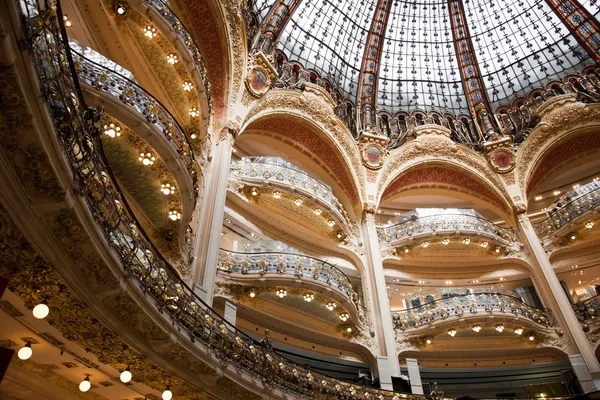
In 2010, UNESCO declared the French gastronomic meal an Intangible Cultural Heritage of Humanity. The recognition was not for a specific dish or a starred restaurant but for something far deeper: the complete ritual of sitting down at the table, from the apéritif to the closing liqueurs, through at least four courses — starter, fish or meat with vegetables, cheese and dessert. Nowhere in the world is that ritual lived as naturally as in Paris. Here eating well is not a luxury: it is a civic right, a cultural obligation and, for many Parisians, the main reason it is worth getting out of bed every morning.
Bistros, brasseries and bouillons: every venue has its rules
The first confusion visitors face in Paris is understanding the difference between a bistro, a brasserie and a café. It is not a question of quality but of format. The bistro was born in the late nineteenth century as a small, affordable dining room for Industrial Revolution workers: cramped tables, a short menu, hearty dishes like coq au vin or boeuf bourguignon. Its name, according to the most popular legend, comes from the Russian bystro — quickly — shouted by Russian soldiers in Parisian cafés after the Napoleonic Wars. The brasserie, on the other hand, is a child of Alsace: Alsatian brewers brought it to Paris in the mid-nineteenth century, and the word literally means brewery. The great Parisian brasseries are recognized by their brass fittings, Art Deco stained glass, seafood platters on the pavement and a kitchen that never closes between lunch and dinner. And then there are the bouillons, popular canteens born in the 1850s to feed Haussmann’s labourers: tight prices, generous portions and décor that often preserves the mirrors and mouldings of the nineteenth century.
Breakfast and the boulangerie: a sacred act
The gastronomic day in Paris begins at the boulangerie. Not at a restaurant, not at the hotel. At the neighborhood boulangerie, with its flour-dusted window and a queue of locals who know the baker by name. The croissant au beurre — crispy on the outside, with tender layers inside, made with real butter — is the standard. The pain au chocolat is the indulgent alternative. And the baguette tradition, with its golden crust that cracks when you break it, is so important to the French that in 1993 a law — the Décret Pain — protected its composition: only wheat flour, water, yeast and salt. An artisan baguette contains no additives whatsoever. Coffee is drunk black, in a small cup, standing at the counter of the nearest café, and the average Parisian finishes it in under three minutes before diving into the metro.
The neighborhoods where people really eat
Paris has gastronomic neighborhoods that function as complete ecosystems. Le Marais, in the heart of the third and fourth arrondissements, ranges from the legendary falafels on Rue des Rosiers to new-generation bistros blending French tradition with world cuisines. Saint-Germain-des-Prés, on the Left Bank, is the territory of literary terraces — Les Deux Magots, where Sartre and Beauvoir debated existentialism over a café crème, opened in 1885 — and chocolate shops that treat cocoa with the same reverence a sommelier reserves for Bordeaux. The Latin Quarter, around Rue Mouffetard, preserves one of the city’s oldest street markets: cheese shops, charcuteries, fishmongers and pâtisseries line a cobblestoned street where every stall smells better than the last. And Montmartre, on the hill, still harbors small neighborhood bistros where the menu du jour — entrée, plat and dessert for fifteen or twenty euros — is the best way to eat like a real Parisian.
The dishes you cannot leave without trying
The croque-monsieur was first documented in the magazine La Revue Athlétique in 1891, although legend places it in a Parisian café around 1910. It is, in essence, a ham and Gruyère sandwich bathed in béchamel and grilled until the crust crunches — simple, perfect, addictive. Its variant with a fried egg on top is called croque-madame, because someone decided the egg looked like a lady’s hat. Coq au vin, originally from Burgundy, was born as peasant food: old roosters slow-cooked in red wine to tenderize the meat, which eventually became a Parisian bistro classic. Soupe à l’oignon, with its molten cheese crust that resists the spoon, was for centuries the supper of night workers at Les Halles, Paris’s former central market. And crème brûlée — whose earliest written recipe appeared in 1691 in Cuisinier royal et bourgeois by François Massialot, a chef at the Palace of Versailles — remains the dessert Parisians order when they want something that never disappoints.
Cheese and wine: the national religion
France produces more than 1,200 varieties of cheese. That is not a poetic figure: it is counted by the Centre National Interprofessionnel de l’Économie Laitière. More than 40 hold a protected designation of origin (AOC), starting with Roquefort, which was awarded the first cheese AOC in 1925. In Paris, fromageries are temples. A good fromager does not merely sell cheese: he ages it, matures it, turns it daily in his cellars and advises you with the same authority a doctor would use to prescribe a treatment. Brie de Meaux, born in the Île-de-France region surrounding Paris, is the quintessential local cheese — its white rind and almost-overflowing creamy interior are a spectacle that demands a crusty baguette and nothing more. As for wine, Paris is the gateway to the great regions: Burgundy, Bordeaux, the Loire Valley, Alsace. Any decent bistro has a wine list with more pages than the food menu, and asking for the waiter’s recommendation is always a better idea than trying to decipher the list alone.
The markets: where Paris really shops
Supermarkets exist, but any self-respecting Parisian still shops at the marché. Marché d’Aligre, in the twelfth arrondissement, has been running since the late eighteenth century and combines a covered market — Marché Beauvau, built in 1779 — with a street packed with open-air stalls where fruit and vegetables look the way they always should: irregular, colorful, smelling of earth. Marché Bastille, on the former route of the Canal Saint-Martin that Napoleon authorized in 1802, sets up every Thursday and Sunday on Boulevard Richard Lenoir and is one of the city’s largest: mountains of cheese, bulk olives, artisan charcuterie and bakers who let you taste before you buy. Visiting a Parisian marché is not just grocery shopping: it is understanding how a culture elevated everyday eating to the status of art.
If Parisian gastronomy has whetted your appetite, our 5-day Paris guide includes recommended restaurants neighborhood by neighborhood, day-by-day itineraries with Google Maps, museum and monument opening hours, and everything you need to enjoy every meal without missing a single corner of the city.
Comments
Get the best travel tips
Subscribe to the Omyguide blog and never miss an article.
No spam. Unsubscribe anytime.