Edinburgh Castle: the fortress that forged Scotland
A thousand years of Scottish history atop a volcanic rock. The castle, the crown jewels, and the secrets of Castle Rock.
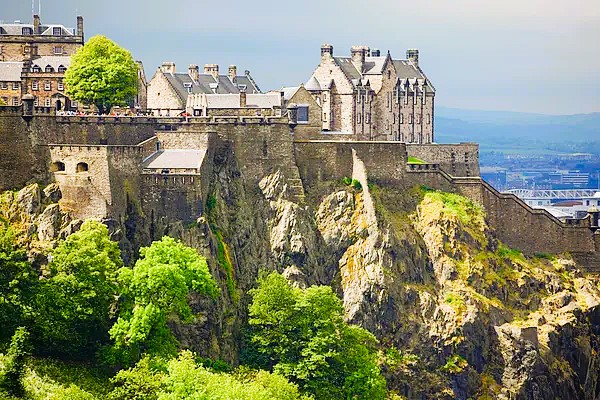
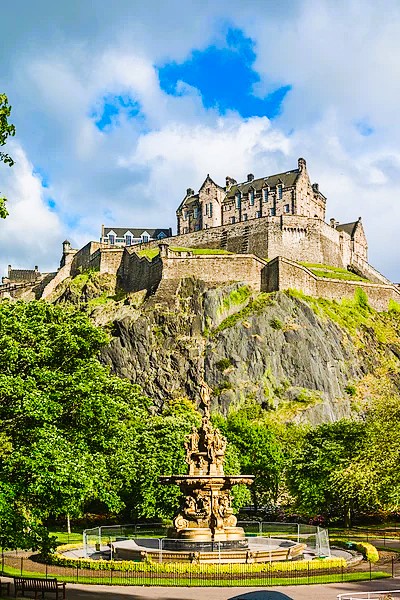
Few fortresses in the world have witnessed so much history from so high. Edinburgh Castle rises 130 meters above sea level, perched atop Castle Rock, the core of an extinct volcano that has dominated the Scottish landscape for 350 million years. Three sides are sheer vertical cliffs of basalt rock. The fourth, the only accessible slope, is blocked by walls, cannons, and centuries of military architecture designed to ensure that no one unwelcome could reach the top. For over a thousand years, whoever controlled that crag controlled Scotland. And that is exactly why it remains the most visited monument in the country today.
The rock that forged a nation
Castle Rock was not chosen by accident. Geology did the work: when the glacier of the last Ice Age retreated about 12,000 years ago, it scraped away the landscape around the volcanic plug, but the basalt rock resisted, creating a natural impregnable promontory. The first fortified settlements date back to the Iron Age, but the castle's documented history begins with King David I, who in 1130 ordered the construction of St. Margaret's Chapel in honor of his mother. That building, a small Romanesque chapel with a rounded arch and austere windows, still stands. It is the oldest building in Edinburgh, and probably the only one that Mary, Queen of Scots would recognize if she returned today.
The Honours of Scotland: Britain's oldest crown jewels
In the castle's Crown Room, beneath a security display case, lie the Honours of Scotland: the crown, the sceptre, and the sword of state. They are the oldest crown jewels in the British Isles. The crown was made in Scotland and in its present form dates from 1540, though it incorporates gold from an earlier 15th-century crown. The sceptre and sword, by contrast, are Italian gifts: commissioned by Pope Julius II and sent to King James IV in the early 16th century in recognition of his defense of the Catholic faith. Together, these pieces crowned the Scottish monarchs from Mary, Queen of Scots in 1543 to Charles II in 1651. After the union of the crowns with England, the Honours fell into disuse and were stored in a locked chest. In 1818, writer Walter Scott led a search to find them. When they opened the chest in a dusty castle chamber, the jewels were still there, intact.
During World War II, the British government feared the Honours might fall into Nazi hands if Germany invaded the United Kingdom. The solution was to hide them within the castle itself: the crown and some jewels were buried beneath the floor of a lavatory, while the sceptre, sword, and ceremonial rod were walled up inside a chamber. The war ended, the Honours were returned to their display case, and today visitors can see them alongside the Stone of Destiny, the rock upon which Scottish kings were crowned and which England had taken to Westminster for seven centuries before returning it in 1996.
Mary Queen of Scots and the birth of a king
On June 19, 1566, in a small room in the castle known as the Birth Chamber, Mary, Queen of Scots gave birth to her only son: James. The queen had fled from the Palace of Holyroodhouse after the brutal murder of her secretary David Rizzio, stabbed before her by conspirators that included her own husband, Lord Darnley. The castle, with its walls and cliffs, was the safest place in Scotland. That child, James VI of Scotland, would grow up to also become James I of England when Elizabeth I died without an heir in 1603, uniting the crowns of both kingdoms for the first time. The room where he was born can still be visited, and the stone walls echo with one of the most tense nights in Scottish history.
Mons Meg and the One O'Clock Gun
Beside St. Margaret's Chapel rests Mons Meg, a medieval siege cannon with a calibre of 510 millimeters, one of the largest ever built. It was made in 1449 on the orders of Philip the Good, Duke of Burgundy, and sent as a gift to King James II of Scotland in 1454. Mons Meg fired stone projectiles weighing 150 kilograms over a distance of more than three kilometers, and its roar must have been heard throughout the city. Today it is a museum piece, but the castle preserves another sonic tradition: the One O'Clock Gun. Every day, except Sundays, Christmas, and Good Friday, a cannon fires at exactly 1:00 PM. The custom began in 1861 so that ships anchored in the Firth of Forth could synchronize their chronometers. The shot is heard across much of Edinburgh, and tourists crowd the battlements to witness it.
Visiting the castle today
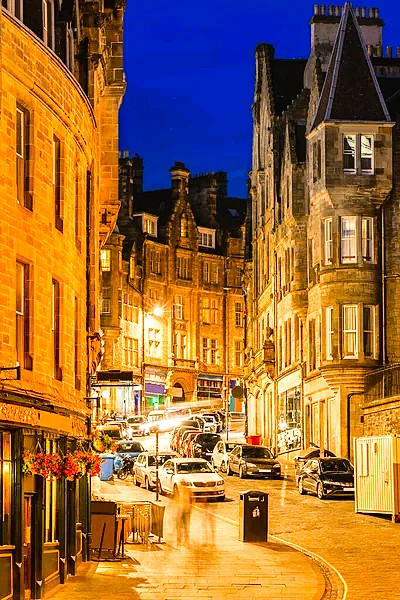
Access to the castle is via the steep Royal Mile, the artery that connects the fortress to the Palace of Holyroodhouse. After crossing the main gate and drawbridge, the route winds through stepped courtyards, passing the prisons of war, the National War Museum of Scotland, the Great Hall with its impressive wooden beam ceiling, and finally the Crown Room. From the battlements, the views of Edinburgh are complete: Princes Street, Calton Hill, the Firth of Forth, Arthur's Seat. On clear days, you can see as far as Fife across the water. The full visit takes between two and three hours if you read the information panels, enter all the rooms, and wait for the one o'clock gun. And if the castle seems familiar without ever having visited, it may be because it has appeared in dozens of films, from «One Day» to BBC documentaries.
Underground Edinburgh
Beneath the Royal Mile lies another city. The Blair Street vaults, sealed for centuries, are a labyrinth of stone chambers once used as workshops, warehouses and, legend has it, refuge during plague outbreaks. Edinburgh was literally built on top of itself: when the medieval city ran out of horizontal space, they built new streets over old ones, burying entire floors of buildings. Mary King's Close, now open for tours beneath City Chambers, contains complete seventeenth-century streets preserved underground. The evening tours through these vaults blend real history with ghost stories that raise the hairs on your neck whether you believe in the supernatural or not.
Whisky with castle views
Steps from the castle esplanade, the Scotch Whisky Experience offers a journey through Scotland's whisky regions —from Islay's smoky malts to the floral Highlands— and houses the world's largest collection of Scotch whisky: nearly 3,500 bottles. For something more informal, the pubs of Grassmarket, directly beneath the castle walls, serve single malts with the finest view imaginable: towers and battlements silhouetted against the Scottish sky.
Beyond the walls
Edinburgh Castle is not just stone and cannons. It is the physical symbol of Scottish identity, the place where the national crown is kept under lock and key, where kings were born and sieges were fought that changed the map of Europe. And it remains alive: every August, during the Edinburgh Military Tattoo, the castle esplanades become the stage for one of the world's largest military and musical spectacles, with pipe bands, projections on the walls, and fireworks that light up Castle Rock as if the fortress were at war again. Except now, instead of defending, the castle celebrates.
If the history of Edinburgh Castle has left you eager to explore the Scottish capital in depth, our Edinburgh weekend guide includes itineraries with Google Maps, routes through the Royal Mile, the best traditional pubs, how to get from the airport, and all the practical details to make the most of every hour in the city.
Comments
Get the best travel tips
Subscribe to the Omyguide blog and never miss an article.
No spam. Unsubscribe anytime.