Oaxaca food guide: mole, mezcal and ancestral markets
Discover the seven moles, artisan mezcal, tlayudas and ancestral markets of Oaxaca. Your complete guide to eating well in Mexico's gastronomic capital.
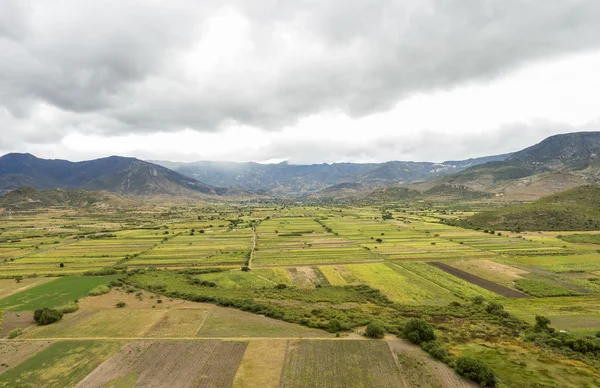
Some cities are visited for their monuments, others for their beaches, others for their museums. Oaxaca is visited for what happens inside a clay comal, at the bottom of a volcanic stone molcajete, in the dim light of a palenque where agave is transformed into something that transcends the word drink. Oaxaca is not merely Mexico's gastronomic capital: it is one of the few places on the planet where eating remains a ceremonial act, a bond with civilizations that raised pyramids over two thousand years ago and left their culinary wisdom intact, waiting in every tortilla, every salsa, every sip of mezcal.
In 2010, Mexican cuisine was declared Intangible Cultural Heritage of Humanity by UNESCO, becoming the first national cuisine in the world to receive this recognition. Within that gastronomic universe, Oaxaca holds a central place. With 16 distinct ethnic groups — Zapotec, Mixtec, Chatino, Mixe, Triqui, among others — the state of Oaxaca concentrates a cultural diversity that translates directly into a diversity of flavors. Each valley, each mountain range, each coast contributes ingredients, techniques and recipes that exist nowhere else on earth.
The seven moles: Oaxaca's liquid soul
If French cuisine has its mother sauces, Oaxaca has its seven moles. These are not seven variations on the same recipe: they are seven distinct sensory universes, each historically linked to one of the state's seven original regions. Preparing an Oaxacan mole is an act that can take days, involving dozens of ingredients — dried chiles, spices, seeds, herbs, fruits, chocolate — and requiring a patience and knowledge passed down from generation to generation, almost always from woman to woman, from mother to daughter, from grandmother to granddaughter.
Mole negro is the undisputed king. It is the most complex of the seven, with over thirty ingredients including chilhuacle negro, mulato and pasilla oaxaqueño chiles, chocolate, plantain, avocado leaf, clove, cinnamon, pepper, thyme and oregano. Traditional cooks toast each ingredient separately, controlling the precise charring point of the chiles — which gives it that dark, nearly black color and deep flavor with smoky notes — then grind everything on a metate before cooking for hours. Mole negro is the star of weddings, baptisms, Day of the Dead and patron saint festivals. It is served over chicken or turkey, always accompanied by handmade tortillas and red rice.
Mole rojo is the spiciest of the family, with a tomato and ancho chile base that gives it an intense red color and a direct punch. Mole amarillo, perhaps the most everyday, is made with yellow guajillo chiles, corn masa and cumin, lighter and almost broth-like. Mole verde stands apart because its ingredients are used fresh: pumpkin seeds, green tomato, jalapeño, epazote, hierba santa and parsley. It is the only mole that works with fish. Coloradito has a reddish-brown tone and slightly sweet flavor from the combination of ancho chiles and chocolate. Chichilo is one of the oldest and most obscure: chiles toasted to the point of charring and avocado leaves give it a smoky, intense character. And manchamanteles, as its name suggests — stain the tablecloth — is the most exuberant: it incorporates fruits like pineapple, banana and apple alongside chiles and spices, creating a unique sweet-and-savory combination.
From Monte Albán to the comal: the pre-Hispanic roots of Oaxacan cuisine
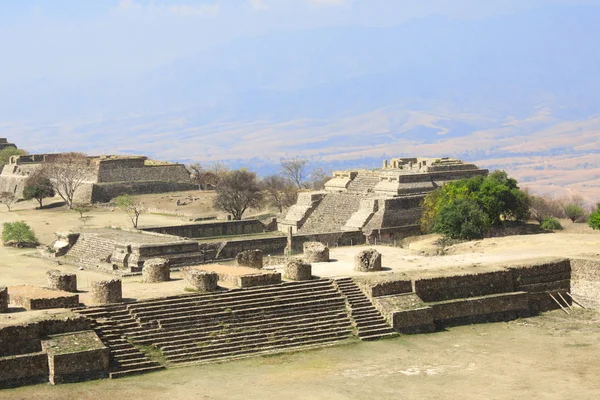
Oaxacan gastronomy cannot be understood without looking back at Monte Albán, the ancient Zapotec capital that dominated the Central Valleys between 500 BC and 800 AD. The Zapotecs domesticated corn, cultivated beans and squash in the milpa — that tripartite agricultural system still alive today — used chile as both medicine and flavoring, and developed cooking techniques that remain intact: nixtamalization, metate grinding, smoking, fermentation. When you eat a tlayuda at a street stall in Oaxaca, you are participating in an unbroken chain connecting the 21st century to the pre-Hispanic world.
Zapotec descendants still inhabit the region, and their culinary legacy is not locked in a museum: it is alive in the markets, in family kitchens, in every village's patron saint celebrations. Mixtec, Chatino and Mixe influences also permeate the state's gastronomy, contributing endemic ingredients from the highlands, the coast and the jungle found in no other cuisine on earth.
Tlayudas: the queen of street food
The tlayuda is to Oaxaca what pizza is to Naples: a disc of dough that has become the identity symbol of an entire culture. It is a large corn tortilla — reaching up to 40 centimeters in diameter — partially cooked on a comal until semi-toasted, both chewy and crunchy. The name comes from the Nahuatl tlao-li, meaning shelled corn, and its tradition stretches back centuries in the Central Valleys, with the town of San Antonio de la Cal recognized as its birthplace.
The classic preparation begins with a generous layer of asiento — seasoned lard that Oaxacans consider indispensable — followed by refried black beans, melted quesillo strips, and a protein of choice: tasajo, cecina enchilada or chorizo. It is crowned with avocado slices, shredded cabbage and salsa. Folded in half and eaten with your hands, standing, sitting on a plastic stool, or walking through the cobblestone streets. The best tlayuda stalls appear after eight at night: look for a queue and charcoal smoke. A tlayuda costs between 60 and 100 pesos and satisfies a hungry person with ease. In 2020, it was voted the best street food in Latin America.
Chapulines, tasajo and quesillo: the Oaxacan trinity
Chapulines — toasted grasshoppers with salt, lime and chile — are a direct legacy of the pre-Hispanic era. With 60 to 70 percent high-quality protein, they are nutritionally superior to beef. In Oaxaca they are eaten alone as a snack, added to tacos, quesadillas and guacamole, and sold at markets by the kilo, sorted by size. Peak season runs from July to October. At Mercado Benito Juárez, 250 grams cost around 150 pesos.
Tasajo is beef cut into thin strips, salted and sun-dried — the go-to protein for tlayudas. Quesillo, known outside Oaxaca simply as Oaxaca cheese, is a fresh string cheese rolled into balls. Its origin is attributed to a happy accident in 1885 in Reyes Etla, when a young woman named Leobarda Castellanos García forgot curdled milk on the fire and, pouring hot water to rescue it, discovered that the mass melted into soft, elastic strings. Reyes Etla remains the artisan quesillo epicenter, where families produce with fresh milk, animal rennet and salt — nothing more — keeping alive a tradition spanning over a century.
The markets: cathedrals of living gastronomy
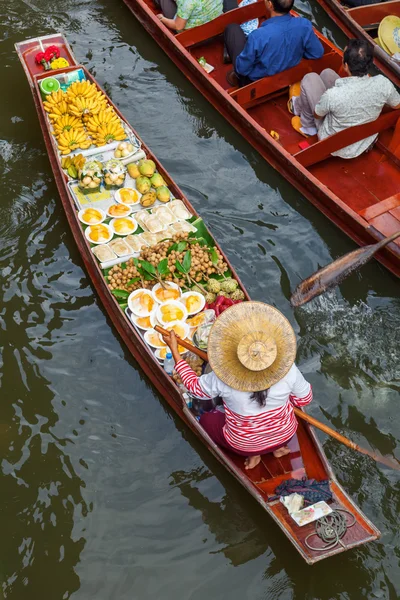
Mercado de Benito Juárez is the more traditional of the two central markets. Here you buy raw ingredients: piles of chapulines sorted by size, quesillo balls, dark aromatic blocks of mole paste, chocolate tablets, dried chiles, medicinal herbs and tejate served in gourds. Mercado 20 de Noviembre is pure culinary action. Its famous smoke corridor houses dozens of grilled-meat stalls where the ritual never changes: you choose your cut, they grill it over charcoal before your eyes, and serve it with fresh tortillas, salsa, guacamole and beans. The market can seat up to 15,000 diners per day across more than 200 establishments. Many cooks have spent over sixty years at their stalls, and their recipes represent a living gastronomic heritage passed from generation to generation. With 150 pesos, two people eat until full.
Mezcal: the spirit of the Oaxacan earth
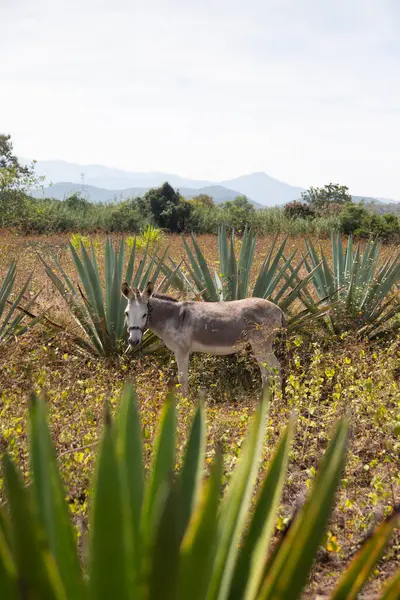
Oaxaca produces over 90 percent of all mezcal worldwide, and the small town of Santiago Matatlán, 45 minutes from the capital, proudly holds the title of World Capital of Mezcal. The process begins in agave fields, where varieties like espadín — accounting for 80 to 90 percent of production —, tobalá, tepeztate and arroqueño grow for years before reaching maturity. Jimadores cut the leaves with machetes to expose the piña, the agave heart. These piñas are cooked for days in conical stone ovens dug into the earth and fueled with oak firewood — the subterranean cooking that gives mezcal its smoky character, radically distinguishing it from tequila. The cooked piñas are crushed with a tahona — a stone wheel pulled by a horse — and the juice ferments naturally in wooden vats before being distilled in copper or clay stills.
In Santiago Matatlán, every corner houses a family palenque where master mezcaleros, with knowledge passed from father to son for generations, produce mezcals of extraordinary quality. Many offer free tours with tasting. Buying directly from the producer costs between 200 and 400 pesos per artisan bottle, compared to 600 or more in city shops. The Oaxacan land harbors some 30 agave varieties used for mezcal, generating a diversity of flavors no other region in the world can match.
Chocolate and tejate: the ritual beverages
Oaxacan chocolate is prepared uniquely: with water instead of milk, preserving a pre-Hispanic tradition. In the downtown chocolaterías, women who are guardians of ancestral knowledge roast cacao with cinnamon, almond, sugar and sometimes vanilla or clove, grind it on a metate, dissolve it in hot water and whisk it with a molinillo until foam crowns the gourd. It is a direct journey to the Aztec xocolatl.
Tejate is even more ancient. This cold drink of Zapotec and Mixtec roots is made with corn, cacao, mamey seed and rosita de cacao — an aromatic flower native to the region. Its name comes from Nahuatl and means flour water. The mixture is hand-beaten for roughly an hour until natural foam forms. In pre-Hispanic cultures it was considered a drink of the gods, used in sacred ceremonies. Today it can be found in the markets each morning, served in gourds, for about 20 pesos a glass.
Street food: a world beyond the markets
The Oaxacan street scene extends far beyond the markets. Mornings bring tamales wrapped in banana leaf with mole negro, empanadas de amarillo stuffed with mole amarillo and chicken, and memelas — small thick tortillas with beans, salsa and quesillo for 15 pesos. At midday, street comedores serve a full comida corrida — soup, main course with mole, rice, tortillas and fruit water — for 60 to 80 pesos. In the afternoon, carts of elotes and esquites claim the corners, and artisan ice cream stalls offer flavors found only here: burnt milk, rose petals, prickly pear, mezcal. And when night falls, the tlayuderas light their braziers and the whole city smells of toasted corn, grilled meat and chile.
Tips for eating in Oaxaca like a local
In Oaxaca, extraordinary food is available at any budget. A full market lunch costs 60 pesos. A tlayuda and mezcal at a street stall, 120. Fine Oaxacan dining at Casa Oaxaca or Los Danzantes runs 600 to 800 pesos per person. Quality is not necessarily tied to price: some of the state's finest cooks work at nameless market stalls. Go to Mercado Benito Juárez early — it opens at seven, when ingredients are freshest and tejate is newly beaten. Mercado 20 de Noviembre peaks between eleven and two, when the smoke corridor runs at full power. And one last piece of advice: when you are in Oaxaca, drink mezcal the way Oaxacans do. Not in one shot, but a besitos — small sips that let you appreciate every nuance. Mezcal is not drunk: it is conversed with.
Our 7-day Oaxaca guide includes market maps with the best stalls marked, optimal times for each dish, a complete mezcal route through Santiago Matatlán, day-by-day itineraries from Monte Albán to Puerto Escondido and all the practical information to experience Oaxacan gastronomy in depth.
Comments
Get the best travel tips
Subscribe to the Omyguide blog and never miss an article.
No spam. Unsubscribe anytime.